
30
May
2006
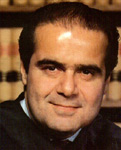 On March 28, U.S. Supreme Court Justice Antonin Scalia took his seat at
the nation’s highest court to hear Hamdan v. Rumsfeld. His task, along
with the other justices, was to determine whether Salim Hamdan, a
captured enemy combatant, should be afforded a fair and basic trial.
The court would hear, for the first time, arguments from both sides
over whether Hamdan should be afforded basic due process rights as a
war-time detainee – an outcome that would establish a dramatic
precedent in American law governing times of war.
On March 28, U.S. Supreme Court Justice Antonin Scalia took his seat at
the nation’s highest court to hear Hamdan v. Rumsfeld. His task, along
with the other justices, was to determine whether Salim Hamdan, a
captured enemy combatant, should be afforded a fair and basic trial.
The court would hear, for the first time, arguments from both sides
over whether Hamdan should be afforded basic due process rights as a
war-time detainee – an outcome that would establish a dramatic
precedent in American law governing times of war.
The lawyers for Hamdan knew they were facing an uphill battle. But the
problem wasn’t in their argument. It was in persuading a justice who
had already made up his mind about the issue.