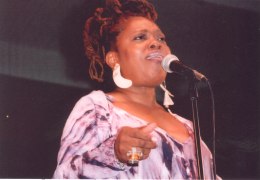
Robert Irving III Keyboardist Robert Irving III, Miles Davis' musical director for most of the 1980s, will be performing a concert and leading a workshop on Sunday, February 18, at Davenport's River Music Experience.

Both the workshop and evening performance - organized by Polyrhythms - will feature Irving with saxophonist James Perkins, drummer Ernie Adams, and bassist Marlene Rosenberg.

The Davenport city leadership is receiving strong objections from the community regarding the elimination of regular standing-committee meetings by folding them into the bi-weekly Committee of the Whole (COW) meeting. How responsive it will be to the collective opposition to this serious degradation of the public process remains to be seen, especially since it tends to conduct far more business behind closed doors these days.

On Tuesday, February 13, the Illinois Housing Development Authority awarded $1.08 million to Rock Island Economic Growth Corporation for the HOME program. The award was scheduled to be presented at 1224 26th Avenue in Rock Island, the home of Dan Cibulka - a previous participant in the organization's home-buyer program. This is the largest single amount of HOME funding for the home-buyers' purchase and renovation program ever awarded to a sponsor in the state of Illinois. This is the seventh phase of funding for Rock Island Economic Growth Corporation.


Reader issue #619 The history of passenger rail in the Quad Cities illustrates just how capricious - and divorced from rational decision-making - business and politics can be.

The Quad Cities lack rail service not necessarily because of a lack of demand, but because of a long-forgotten business decision.

proposed railway map Passenger rail to the Quad Cities is part of a larger discussion about how a community moves its people. While our transportation policy most often focuses on how to move automobiles from one place to another, alternative transportation has frequently been ignored.

That's shifting. An aging population, traffic congestion, air-travel hassles, high fuel prices, and concern about global warming have all sparked renewed interest in mass-transit options such as passenger rail (getting from city to city) and commuter rail (transportation within a city).

Minus Six, The third record from the Quad Cities' Minus Six, Hidden Deep in the Green, has the vibe of a musical-theatre soundtrack. If the idea of a pop record that invokes Broadway makes you recoil in horror, then you're wise to avoid this. If you're intrigued, you're likely to be carried away by singer/songwriter Kevin Carton and his band.

Here's the question: If eliminating the Davenport City Council's Thursday-afternoon standing-committee meetings is a positive change for Davenport citizens, then why all the hush and rush?

For months, most Statehouse observers have predicted a battle royale between the state's three top Democrats: Governor Rod Blagojevich, Illinois House Speaker Michael Madigan, and Senate President Emil Jones.

The three men haven't been getting along, and the relationships between Madigan and Blagojevich, and between Madigan and Jones, are particularly strained. So far, Jones and Blagojevich are doing okay together, but that could change in a heartbeat if Blagojevich and Jones tangle over school funding. Jones wants a lot of money for schools, but Blagojevich refuses to raise taxes.

After hearing a presentation by Superintendent Jim Spelhaug at its monthly board meeting, the Bettendorf Chamber of Commerce voted to support the proposed renewal of the Pleasant Valley Community School District Physical Plant & Equipment Levy (PPEL). The vote on renewal takes place on February 13. The Bettendorf Chamber's support was based on trends showing substantial residential growth within the district over the long-term, resulting in increasing enrollment. Such trends increase the need for the PPEL fund. PPEL is used to maintain buildings and grounds; to complete remodeling projects; to purchase or lease technology, vehicles, and equipment; and to support major capital-improvement projects such as building additions or new facilities.


Reader issue #618 Traditional campaign-finance reform involves contribution limits, but nobody thinks they've made a dent in the role of money in politics. Candidates who must comply with contribution limits don't seem any less beholden to special interests than other politicians.

But a new type of election reform is gaining popularity around the country, and it's likely to make some headway in Iowa during this year's legislative session. While "clean elections" - publicly financed political campaigns - probably won't pass the state legislature this year, there's a good chance they'll make it farther than ever.

Pages